5 Best Small Bread Machines for Small Loaves (October 2026)
The best small-loaf bread machines include the Elite Gourmet 2 lb (Black) for changing household needs, the Hamilton Beach Digital Bread Maker for fruit bread bakers, and the Elite Gourmet PFAS-Free 2 lb for ceramic pan shoppers.
On this page (9 sections)
- Which bread machine for small loaves fits your needs?
- How we compared small-loaf bread machines
- What should you check before buying a small bread maker?
- Is a dedicated 1 lb machine better than an adjustable model?
- How do you set up your first small loaf?
- How should you use delay start and keep warm?
- How do you clean and care for a small bread machine?
- Which mistakes cause trouble with small bread batches?
- Which bread machine for small loaves should you choose?
The Elite Gourmet 2 lb (Black) is our top bread machine for small loaves if your household needs change from day to day. Choose the Zojirushi Home Bakery Mini if you want only small batches and have no use for a larger loaf.
A small loaf setting and a small appliance solve different problems. Start with how much bread you eat, then measure where the machine will work and where you will store it.
For a broader look at features and fit, start with our bread machine buying guide. You can also compare more models in our picks for the best bread makers or see what matters for a first machine in our beginner bread machine guide.
Our picks at a glance
-
1

-
2

-
3

Which bread machine for small loaves fits your needs?
Choose the Elite Gourmet Black for flexible batches, Hamilton Beach for add-in reminders, or the ceramic Elite Gourmet for its pan coating. The Zojirushi is the clearest fit for dedicated small-loaf baking, while the Rosewill suits a narrow space after you confirm its minimum batch size.
Elite Gourmet 2 lb (Black) for small loaves
Elite Gourmet 2 lb (Black): Best for changing household needs
- 1 lb, 1.5 lb and 2 lb loaf sizes
- 19 programs
- 15-hour delay timer
- 60-minute keep warm
A flexible choice for small daily batches and occasional larger loaves. Check overhead clearance because it is the tallest machine here.
Pros
- Three loaf sizes
- Bread and dough programs
- Delay timer and keep warm
Cons
- Tallest machine among these picks
- Not a dedicated small-loaf machine
The Elite Gourmet Black suits a household that eats modest amounts of bread most days but sometimes needs more. Its 1 lb, 1.5 lb and 2 lb settings let you change batch size without keeping a second machine.
Its 19 programs cover everyday bread styles plus options such as pizza dough, cake and jam. That range is useful if you want the machine to earn its counter space beyond sandwich bread.
The 15-hour delay timer helps you plan plain bread around a meal, while 60-minute keep warm gives you time to unload it. Reserve delayed starts for recipes that are suitable for sitting before the cycle begins.
Choose this model if flexible batches matter more than having the smallest body. Its height makes it a weaker choice beneath low cabinets, especially if the lid cannot open fully in your planned spot.
Skip it if you are certain you will never bake more than a small loaf. The Zojirushi gives that buyer a narrower, dedicated option.
Hamilton Beach for bread with add-ins
Hamilton Beach Digital Bread Maker: Best for fruit bread bakers
- 1 lb, 1.5 lb and 2 lb loaf sizes
- Beep for add-ins
- PFAS-free nonstick pan and paddle
- Digital countdown timer
An add-in beep helps you time fruit, nuts and seeds, while a countdown shows when baking will finish. It needs more counter depth than the other picks.
Pros
- Three loaf sizes
- Countdown display
- Add-in reminder
Cons
- Deepest machine among these picks
- Add-ins require your attention during the cycle
The Hamilton Beach fits bakers who want raisins, seeds or nuts in their bread and appreciate a reminder to add them. It beeps before the second kneading cycle, so you do not have to guess the right moment.
You still need to be nearby to respond. Choose a plain loaf for times when you will leave the machine alone, rather than planning a fruit bread around an alert you cannot hear.
The digital countdown helps you judge when to return and prepare a cooling rack. Light, medium and dark crust choices let you adjust browning without changing the recipe.
Its PFAS-free nonstick pan and paddle also make it worth considering if coating choice matters to you. That does not remove the need for gentle cleaning and utensils.
Choose it for useful cycle cues and adjustable batches. Skip it if your counter is shallow, since it needs the most front-to-back space of these picks.
Its lower body height may suit some cabinet layouts, but you still need room above it to open the lid and lift the pan.
Elite Gourmet PFAS-Free for a ceramic-coated pan
Elite Gourmet PFAS-Free 2 lb: Best for ceramic pan shoppers
- 1 lb, 1.5 lb and 2 lb loaf sizes
- PFAS-free ceramic-coated pan and blade
- 19 programs
- 15-hour delay timer
Choose this model when a ceramic-coated pan and blade matter more than a narrow body. Adjustable batches leave room for both everyday bread and larger bakes.
Pros
- Three loaf sizes
- Ceramic-coated pan and blade
- Bread, dough and yogurt programs
Cons
- Widest machine among these picks
- Coated surfaces need careful handling
The Elite Gourmet PFAS-Free model is the choice for buyers who specifically want a ceramic-coated pan and kneading blade. Both coated parts are PFAS-free, so the material choice extends beyond the pan alone.
It offers adjustable batches with 19 programs, including rice bread, whole wheat, dough and yogurt. Buy for the recipes you expect to repeat rather than the number of menu choices.
The delay timer and keep warm function suit scheduled baking, but a coating preference is the main reason to choose this model over the black Elite Gourmet. It is not the space-saving choice for a narrow opening.
Its shallow body can help on a counter where front-to-back room is limited. The trade-off is width, so measure the usable area beside nearby appliances before deciding.
Choose it if you want ceramic-coated food-contact parts and room to change loaf size. Skip it if a slim body matters more, or if you expect to scrape stuck bread out with metal tools.
Zojirushi Home Bakery Mini for steady small batches
Zojirushi Home Bakery Mini: Best for solo bread eaters
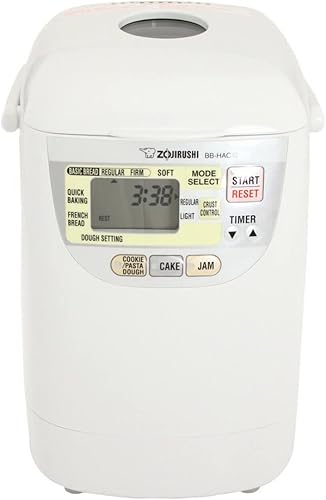
- Makes 1 lb loaves
- 8.5 in wide
- 13-hour delay timer
- Quick-bake cycle
A dedicated small-batch choice for people who do not need larger loaves. Its narrow body and carrying handle help when counter and storage space are limited.
Pros
- Dedicated 1 lb capacity
- Slim body
- Carrying handle
Cons
- No larger loaf option
- Hand wash only
The Zojirushi Home Bakery Mini suits someone whose bread needs stay small. Its dedicated 1 lb capacity removes the temptation to buy extra capacity for rare occasions.
At 8.5 in wide, it fits a slimmer space than either Elite Gourmet or the Hamilton Beach. A carrying handle is useful if the machine will move between a cabinet and the counter.
Its nine programs include bread, cake, jam, and cookie or pasta dough options. A quick-bake cycle and 13-hour delay timer add scheduling choices without changing its small-batch focus.
Choose it if you bake for yourself or share a modest loaf with one other person. It also makes sense if you prefer another fresh batch later rather than baking extra bread now.
Skip it if you regularly need bread for guests or several packed lunches. A second batch takes another full cycle, and there is no larger loaf setting to use instead.
The pan and kneading blade need hand washing. Plan to let them cool, clean them gently and dry them before storing the machine.
Rosewill for a slim counter space
Rosewill 25-in-1 2 lb: Best for narrow counter gaps
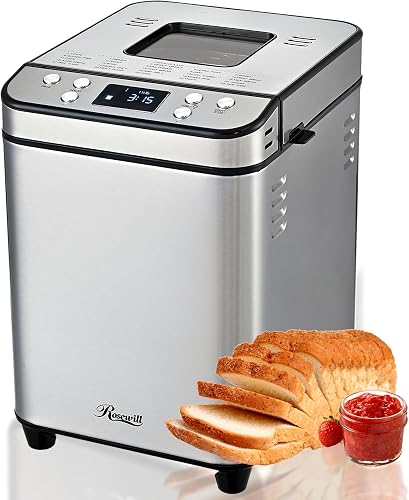
- 8.3 in wide
- Three loaf sizes up to 2 lb
- 25 programs
- 40-minute power recovery
The narrowest body here can suit a slim counter space. Confirm the minimum loaf size before choosing it for a strict small-batch routine.
Pros
- Narrow body
- Bread, cake, yogurt and jam programs
- Power recovery feature
Cons
- Minimum loaf weight needs confirmation
- Hand wash only
The Rosewill is worth considering when machine width is your main limit. At 8.3 in wide, it is the narrowest pick here, though its depth still needs careful measuring.
It offers three loaf sizes up to 2 lb, but the minimum weight needs confirmation. Check that detail before ordering if a true small-batch setting is essential.
Its 25 programs include gluten-free bread, cake, yogurt and jam. Top and bottom heaters are another feature, but heater placement alone is not a reason to choose it over a machine with a confirmed batch size.
A 40-minute power recovery feature may help with brief interruptions. It does not mean you should keep any dough after a long outage without checking the instructions and considering its ingredients.
Choose it if the body fits your counter and its supported recipes match your needs. Skip it if you want to choose immediately with no uncertainty about the smallest loaf.
The pan is PFAS-free and BPA-free nonstick, and this model requires hand washing.
How we compared small-loaf bread machines
We prioritized supported small batches and usable counter fit, then considered controls, coatings and programs. A long feature list matters less than a machine that handles the amount of bread you actually want.
The scores stay consistent across PantryMemo guides. For this decision, match each machine’s strengths to your routine rather than using the score alone.
We did not treat program count or power as proof of better bread. Recipe fit, accurate measuring and the right cycle remain central to getting a useful loaf.
What should you check before buying a small bread maker?
Check minimum batch size, working space and your usual recipe before comparing extra functions. Those three points decide whether a bread maker will suit daily use.
Start with your bread habit
Think about how much bread you finish while it still tastes fresh to you. A person eating toast each morning has different needs from someone who wants an occasional slice with soup.
If you often throw away the end of a loaf, smaller batches deserve priority. If you freeze bread happily, a machine with adjustable capacity gives you another way to manage leftovers.
Avoid choosing by an assumed number of slices. Loaf shape and slice thickness change the count, so loaf weight is a more useful starting point.
Measure the machine in use
Mark the appliance footprint on your counter with paper or tape. Check whether you can still prepare food, reach an outlet and use nearby appliances comfortably.
Then consider the lid and pan. A machine that fits beneath a cabinet while closed may need to move forward before you can load it or remove hot bread.
Follow its manual for ventilation and placement. Leave it on a level, stable surface with the cord clear of hot areas and counter edges.
Choose programs you will repeat
Basic bread and dough cycles may cover most of your baking. A jam or cake setting adds little value if you already prefer making those foods another way.
For gluten-free bread, choose a suitable cycle and a recipe written for that method. A gluten-free button does not make a standard wheat recipe suitable through a simple flour swap.
Our bread machine buying guide covers other features in more detail. If budget is a key factor, compare the options in our guide to budget bread makers.
Is a dedicated 1 lb machine better than an adjustable model?
Choose a dedicated machine for steady small-batch needs and an adjustable model for a household that changes batch size. Neither format automatically makes better bread.
A dedicated machine can simplify the choice because every recipe must fit its limited capacity. It makes sense when you want frequent fresh bread and rarely bake for anyone else.
An adjustable model suits a couple who bake small weekday loaves and larger weekend batches. It also helps if you want extra bread for freezing without running two separate cycles.
Do not assume that choosing the smaller setting changes the recipe for you. The ingredients must match the selected batch size, and you should stay within the machine’s supported range.
Also separate loaf weight from loaf shape. Two loaves with the same weight may produce different slice shapes, so look at the pan shape if sandwich size matters to you.
How do you set up your first small loaf?
Start with a basic recipe from the machine’s manual that matches its smallest supported size. Keeping the first bake simple makes it easier to spot a measuring or setup mistake.
- Read the setup and cleaning instructions, then wash and dry the removable parts as directed.
- Seat the kneading paddle correctly so it can mix the ingredients.
- Measure everything before loading the pan, including the small amounts of salt and yeast.
- Add ingredients in the order required by the manual.
- Lock the pan into place, choose the correct cycle and loaf size, then start.
Use a kitchen scale when the recipe provides weights. If it gives only cup measures, follow that method carefully rather than guessing a weight conversion.
Small batches leave less room for measuring errors. A little extra flour or liquid can change the dough enough to affect how it mixes and rises.
Keep the first recipe plain rather than adding cheese, nuts or extra flour types. Once that loaf works for your routine, change one ingredient or setting at a time.
Our guide to bread machine ingredient order explains why the loading sequence matters. Your machine’s instructions remain the starting point, especially for delayed cycles.
Check the dough at the useful moment
For a standard wheat recipe, look during early kneading if the manual permits it. The dough should gather into a soft mass rather than remain loose flour or spread like a puddle.
If adjustment is needed, add flour or water in small measured amounts and give it time to mix. Avoid pouring in a large correction before the previous addition has worked through the dough.
Do not use that same dough-ball rule for gluten-free recipes, which may have a batter-like texture. Follow the recipe’s own cues instead.
How should you use delay start and keep warm?
Use delay start for suitable recipes and keep warm as a short unloading buffer. Neither feature replaces careful ingredient handling or proper cooling.
Recipes with fresh milk, eggs or other perishable ingredients need special care before a long wait at room temperature. Follow the manual’s delayed-start recipes instead of assuming every loaf can sit safely overnight.
Check whether the timer asks for a delay period or the total time until the bread is ready. That distinction can change when the cycle starts and when you need to return.
For bread with fruit or nuts, plan around any manual add-in step. A delay timer cannot make you available to respond to an alert.
Remove finished bread when practical and cool it on a rack. Leaving it enclosed can trap steam, while slicing it very hot can compress the soft crumb.
Choose your next bake from bread machine recipes for beginners once you have a dependable plain loaf. Keep the same measuring method so recipe changes are easier to judge.
How do you clean and care for a small bread machine?
Let the machine cool, then clean the removable parts according to their instructions. Gentle cleaning protects the coated surfaces and helps prevent dough buildup around the paddle.
Unplug the machine before cleaning. Keep the appliance body out of water, and remove loose crumbs or flour from the baking chamber only as the manual allows.
Do not assume every part can go in the dishwasher because one removable part can. Follow the instructions for the exact pan and paddle supplied with your machine.
For stuck dough, use an approved short soak rather than scraping with a knife. Avoid leaving the whole pan submerged for long periods unless the manual permits it.
Dry the pan, paddle and accessible shaft area before putting the machine away. Leaving damp parts closed inside the body can create odors.
Check the paddle and coating during routine cleaning. If a part becomes damaged, use a compatible replacement rather than forcing a similar-looking part onto the shaft.
Which mistakes cause trouble with small bread batches?
The most avoidable problems come from using the wrong recipe size, changing too much at once or mismeasuring ingredients. Work through those points before deciding that you need a different machine.
Shrinking a large recipe by eye
A smaller loaf needs a complete recipe adjustment, including yeast and salt. Reducing only the flour and water can leave the remaining ingredients out of balance.
Use a supported small-batch recipe first. Do not assume a machine can handle an even smaller batch simply because the pan has plenty of empty space.
Choosing quick bake for every recipe
A faster cycle changes the time available for mixing and rising. Use a recipe intended for that cycle rather than expecting the same result from any bread formula.
Choose the cycle by bread type before choosing by convenience. Whole-grain and gluten-free recipes can need different treatment from basic white bread.
Making several changes after one disappointing loaf
New flour, extra seeds, a different yeast amount and a darker crust setting create too many variables at once. Keep a short note of the recipe, settings and what you want to change.
If the dough is dry, check flour measurement before adding several new ingredients. If the loaf rises and collapses, review yeast, liquid and recipe size rather than adding more yeast.
Cutting and storing bread too soon
A hot loaf is still releasing moisture. Let it cool before slicing for storage, then freeze portions you will not use soon.
Separate slices before freezing if you want to remove only a few at a time. This can make a small loaf practical even for someone who eats bread only occasionally.
Which bread machine for small loaves should you choose?
Choose your bread machine for small loaves by your repeat routine: how much you bake, where it will sit and which feature changes your day. Extra programs should come after those decisions.
- Choose Elite Gourmet Black if you want small everyday batches with room to bake more for shared meals.
- Choose Hamilton Beach if you regularly add fruit, nuts or seeds and will be nearby for its reminder.
- Choose Elite Gourmet PFAS-Free if ceramic-coated food-contact parts are your main preference and you have enough counter width.
- Choose Zojirushi Home Bakery Mini if you consistently want small loaves and do not need larger batches.
- Choose Rosewill if a narrow body solves your space problem, after confirming its minimum recipe size.
Before ordering, choose the first recipe you will make and identify a safe working spot for the machine. Those two steps turn a feature comparison into a practical buying decision.
For more first-time buying help, read our beginner’s guide to bread machines. If your main question is whether you will use one often enough, our guide on whether a bread machine is worth it can help you decide.
Our top 3 picks at a glance
-
1
-
2
-
3
Frequently asked questions
What size bread machine makes small loaves?
A machine that supports a 1 lb recipe is a useful starting point for small loaves. A dedicated small machine and a larger machine with a small-loaf setting can both fit that need.
Compare the minimum recipe size and outside dimensions separately, since a small loaf does not guarantee a compact appliance.
Can a 2 lb bread machine bake a 1 lb loaf?
Yes, if the machine supports that batch size and you use a matching recipe. Both Elite Gourmet models here and the Hamilton Beach offer that option.
Selecting a smaller loaf setting does not reduce the ingredients for you, so measure the full small-batch recipe before starting the cycle.
Is a 1 lb bread machine enough for one person?
A 1 lb machine can suit one person who eats bread regularly and prefers frequent small batches. It may still make more than you want at once, so consider freezing cooled slices.
Choose adjustable capacity if you also make bread for guests, shared meals or several days of sandwiches.
How do you choose a bread machine for a small kitchen?
Measure the usable counter space, then allow room to open the lid, lift out the pan and follow the machine’s ventilation instructions. Compare depth as well as width.
If you plan to store the machine after each bake, check its weight and the path between the cabinet and counter.
Can you halve any bread machine recipe?
No, halving a recipe can produce a batch below the machine’s supported range. Small yeast quantities are also easy to measure poorly, and a small dough ball may not knead properly in a larger pan.
Start with a recipe written for your machine and chosen loaf size.
Should you leave a small loaf on keep warm?
Remove the loaf when practical and cool it on a rack for a crust that can release steam. Keep warm is useful when you cannot unload the machine right away, but it is not a storage method.
Let the loaf cool before bagging it or freezing individual slices.


