8 Best Bread Makers (October 2026)
The best best bread makers include the Cuisinart 12-Program 2 lb Bread Maker for everyday baking, the KBS Pro 2.2 lb Bread Maker for busy mix-in bakers, and the Zojirushi Virtuoso Plus for frequent sandwich baking.
On this page (7 sections)
- Which best bread maker suits your baking routine?
- How do you choose the best bread maker for your home?
- How should you set up a bread maker for the first loaf?
- What mistakes cause disappointing bread machine loaves?
- How do you use timers and keep-warm functions well?
- How do you clean and care for a bread maker?
- Which best bread maker should you buy?
The Cuisinart 12-Program 2 lb Bread Maker is the best bread maker for most homes because it combines adjustable batches with a compact design. Choose the KBS Pro for automatic mix-ins or the Zojirushi Virtuoso Plus if rectangular sandwich loaves are your priority.
Start with the bread you'll actually eat each week. A machine that suits your usual batch and kitchen layout is more useful than one with extra settings you rarely touch.
If you're still deciding whether this appliance belongs in your kitchen, read Bread Machines: The Complete Home Buying Guide. For a manageable first bake, start with bread machine recipes for beginners.
Our picks at a glance
-
1

-
2

-
3

Which best bread maker suits your baking routine?
Choose Cuisinart for everyday bread, KBS Pro for unattended mix-in additions and Virtuoso Plus for a regular sandwich routine. The other picks suit cooks who want more presets, a horizontal ceramic pan, dough preparation or stored custom settings.
PantryMemo compared loaf formats, controls, useful programs and care requirements. The strongest choice is the machine whose features solve a task you'll repeat, rather than the one with the longest menu.
Cuisinart 12-Program 2 lb Bread Maker: Best for everyday baking
- 12 menu programs
- 1 lb, 1.5 lb and 2 lb loaves
- 3 crust colors
- LCD cycle countdown
Adjustable batches and a compact design make this a useful starting point for regular home baking. The vertical pan suits buyers who value counter space over a conventional loaf shape.
Pros
- Three loaf sizes
- Cycle and countdown display
- Compact footprint
Cons
- Vertical loaf shape
- Pan requires hand washing
The Cuisinart is the clearest starting point if you want regular bread without building a routine around custom controls. Its 1 lb, 1.5 lb and 2 lb settings let you bake a smaller weekday loaf or a larger batch for freezing.
The LCD shows the current cycle and remaining time, which helps you plan when to remove and cool the bread. Audible reminders provide prompts during the process, while the menu also covers uses such as cake and pizza dough.
Its vertical baking cavity is the main trade-off. Expect a loaf shape that differs from a conventional sandwich tin, and consider how those slices will fit your toaster or lunch containers.
Buy it if flexible batches and a counter-friendly design matter more than automatic extras. Skip it if a horizontal loaf or an ingredient dispenser is central to your plans, and allow for hand washing the removable pan.
KBS Pro 2.2 lb Bread Maker: Best for busy mix-in bakers
- 17 programs and 1 custom setting
- Automatic nut dispenser
- Ceramic pan and paddle
- Included recipe book
Automatic ingredient release suits fruit and nut loaves when you can't stay nearby. A custom setting adds control over baking time and temperature.
Pros
- Automatic dispenser
- Ceramic pan and paddle
- Adjustable baking time and temperature
Cons
- More settings to learn
- Dispenser adds a part to clean
The KBS Pro suits bakers who like raisin, seed or nut bread but don't want to return midway through a cycle. Its automatic stainless steel dispenser handles the addition, so that step can fit around other tasks.
The ceramic pan and paddle are another reason to consider it. Treat both surfaces gently during cleaning, and use the dispenser only for ingredients and amounts allowed by the instructions.
Its menu includes gluten-free, sourdough, whole wheat, dough, cake and jam, with a custom option for adjusting baking time and temperature. The included recipe book gives you a starting point before making changes.
Choose this model if automatic additions will be part of your weekly routine. Skip it if you mainly bake plain bread and want the fewest controls, since neither a dispenser nor a wider menu removes the need to measure accurately.
Zojirushi Virtuoso Plus: Best for frequent sandwich baking
- Double kneading blades
- Bottom and lid heaters
- Rectangular loaf
- Rapid white and whole wheat courses
A rectangular loaf and dedicated whole wheat and multigrain courses suit regular sandwich making. Its width and weight favor a permanent place on the counter.
Pros
- Rectangular loaf shape
- Two kneading blades
- Specialty bread courses
Cons
- 18 in wide
- 24 lb machine weight
The Zojirushi Virtuoso Plus is a strong fit for households that regularly turn bread into sandwiches. Its rectangular 2 lb loaf is the key practical reason to choose it over a vertical-pan machine.
Two kneading blades work the dough, while heaters at the bottom and lid provide heat from both positions. Courses include multigrain, whole wheat, gluten-free, salt-free, sugar-free and vegan, giving you defined starting points for those recipes.
Its rapid white and whole wheat courses take 2 hours and 25 minutes. Use recipes written for those courses rather than expecting a standard recipe to work unchanged on a shorter schedule.
Choose it if you can give it a permanent counter spot. At 18 in wide and 24 lb, it's less appealing for frequent cupboard storage; our guide to bread machine flour can help you plan recipes that suit its bread courses.
Elite Gourmet 2 lb (Black): Best for curious preset bakers

- 19 one-touch programs
- Three loaf sizes
- 15-hour delay timer
- 60-minute keep warm
Named programs for bread, pizza dough, cake and other foods suit cooks who want to explore preset recipes. Smaller batch settings help keep that variety manageable.
Pros
- Wide preset selection
- Smaller batch options
- Delay timer
Cons
- 13.98 in tall before opening lid
- Preset variety may exceed everyday needs
The Elite Gourmet suits cooks who want to explore different recipes through one-touch presets. Its 19 programs include rye, French, sweet and quick breads, plus pizza dough, cake, jam and yogurt.
That range is useful if you prefer choosing a named cycle to creating your own settings. Start with one bread recipe, though, so you can learn the controls and loaf removal process before moving among different foods.
Smaller batch options make sense for a household that doesn't finish a large loaf quickly. For occasional cake or jam, check recipe quantities and cleaning steps before switching from bread.
Choose it for preset variety in a narrow counter space. Skip it if saved personal programs are your main goal, and measure overhead room carefully: the body is 13.98 in tall before you open the lid or lift out the pan.
KBS Premium Convection 2.2 lb: Best for rectangular mix-in loaves

- Convection with dual heaters
- Horizontal ceramic pan
- Automatic nut dispenser
- 17 programs
The horizontal ceramic pan and automatic dispenser suit buyers who want rectangular fruit or nut loaves. Convection and dual heaters distinguish it from the KBS Pro.
Pros
- Horizontal loaf format
- Automatic dispenser
- Separate rise and bake programs
Cons
- Touch controls require learning
- Dispenser needs cleaning after use
The KBS Premium is the better KBS match if you want rectangular mix-in loaves from a horizontal ceramic pan. It combines that format with an automatic dispenser, convection and dual heaters.
The heating setup is a reason to compare it with the Pro, but choose around the pan shape and recipes first. Extra heating features won't compensate for an oversized recipe or the wrong flour-to-liquid balance.
Separate rise and bake programs also appeal to cooks who want to handle individual stages. They offer another route alongside full automatic cycles, though you'll need to follow a recipe's timing rather than assume every stage is interchangeable.
Choose it if the horizontal pan, automatic additions and separate stage programs all have a place in your routine. Skip it if you only need a basic loaf cycle, since you'll still need to learn the touch controls and clean the dispenser.
Zojirushi Home Bakery Supreme: Best for dough-focused cooks

- 2 lb rectangular loaf
- Dough, jam and sourdough starter settings
- LCD control panel
- Adjustable crust shade
Dough and sourdough starter settings suit cooks who want the machine to handle part of a recipe. It also bakes rectangular loaves and includes jam and cake options.
Pros
- Dough setting
- Sourdough starter setting
- Rectangular loaf format
Cons
- Hand washing required
- 19.5 lb weight makes frequent storage less convenient
The Zojirushi Home Bakery Supreme suits cooks who want to use a bread machine for dough preparation as well as finished bread. Its dough, jam and sourdough starter settings give it a role beyond baking a loaf from start to finish.
For pizza, rolls or shaped bread, a dough cycle lets the machine handle mixing before you work at the counter. You still control shaping and any later rise or oven bake required by the recipe.
The sourdough starter setting deserves special attention: preparing starter is a separate task from completing a naturally leavened loaf. Read how to make sourdough in a bread machine before choosing a machine around that label.
Buy it if those preparation tasks and its rectangular loaf format fit your plans. Skip it if you chiefly want the Virtuoso Plus's named specialty courses, or if lifting a 19.5 lb machine in and out of storage would discourage regular use.
Hamilton Beach Digital Bread Maker: Best for nearby home bakers

- Gluten-free, dough and cake cycles
- Three loaf sizes
- Add-in beep reminder
- PFAS-free nonstick pan and paddle
An add-in reminder suits bakers who can return to the kitchen during mixing. Adjustable batch sizes and crust settings cover a straightforward bread routine.
Pros
- Adjustable loaf sizes
- Add-in reminder
- PFAS-free nonstick pan and paddle
Cons
- Mix-ins require your attention
- No automatic ingredient dispenser
The Hamilton Beach suits bakers who are usually nearby and are happy to add ingredients themselves. It beeps before the second kneading cycle, giving you a clear point to add fruit, nuts or seeds.
That approach is useful if you want to prepare mix-ins while the first part of the cycle runs. It also means an unattended plain loaf and an attended fruit loaf can fit the same routine without needing a dispenser.
Its cycles cover basic bread, French, whole grain, gluten-free, dough, cake and jam. The PFAS-free nonstick pan and paddle are worth considering if coating choice is part of your buying decision.
Choose it for a straightforward routine with manual mix-in additions. Skip it if you want to load everything and leave during a fruit or nut loaf, since the reminder still needs you to be there.
Breville Custom Loaf BBM800XL: Best for custom recipe bakers
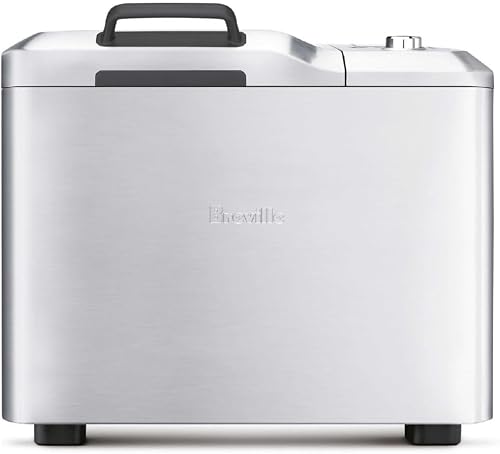
- Nine custom settings
- Automatic bread and dough programs
- Automatic fruit and nut dispenser
- Collapsible kneading paddle
Stored custom settings suit bakers who want to develop and repeat personal recipes. Its folding paddle and automatic dispenser add features beyond a basic preset machine.
Pros
- Stores nine custom settings
- Automatic dispenser
- Collapsible paddle
Cons
- More controls to learn
- Paddle hinge needs careful cleaning
The Breville Custom Loaf suits bakers who want to develop recipes and store their preferred settings. Its nine custom slots make more sense for repeated adjustments than for someone who expects to use one standard cycle.
Automatic programs remain available for gluten-free, yeast-free and crusty bread, plus dough/pasta and jam. The fruit and nut dispenser handles additions without a mid-cycle visit.
Its collapsible paddle folds before baking, but don't choose it expecting a completely unmarked loaf bottom. A folding paddle changes the obstruction inside the dough; the paddle and shaft still need attention when you remove the bread.
Choose Breville if recipe control is a hobby you expect to use, or if its capacity range suits larger batches. Skip it if you want minimal setup, and remember that the paddle hinge needs careful cleaning so dried dough doesn't restrict movement.
How do you choose the best bread maker for your home?
Start with batch size, loaf shape and the recipes you repeat. Then check working space, ingredient additions and care, because those details decide how easily the machine fits into your week.
Which loaf size makes a bread maker best for your household?
Choose a supported recipe size you can finish while the bread is fresh, with freezing as an option for extra slices. Capacity describes loaf weight, so it doesn't tell you the exact number or thickness of slices you'll get.
If you eat toast occasionally, a smaller batch setting matters more than maximum capacity. For packed lunches or weekend guests, a larger batch may save you from running another cycle.
Use our guide to bread machines for small loaves if smaller batches are your priority. Don't halve a large recipe at random, since very small amounts may not mix well in a pan designed for more dough.
Does loaf shape matter for sandwiches?
Horizontal and vertical loaves suit different habits. A conventional rectangular shape is convenient for familiar sandwich portions, while a taller loaf may need a different slicing approach.
Think about your toaster slots, sandwich boxes and bread storage space. A compact machine is less useful if you dislike handling the shape it produces.
Which programs will you actually use?
Match the menu to specific recipes rather than choosing by program count. Whole wheat, gluten-free and quick bread involve different ingredients or timing, so their names describe useful tasks rather than interchangeable shortcuts.
A gluten-free cycle works best with a recipe designed for that process. A sourdough label also needs a closer look, since starter preparation and a complete naturally leavened loaf are different jobs.
Choose stored custom settings when you want to repeat personal adjustments. Choose a dough cycle if you want machine mixing followed by your own shaping and oven baking.
Should you choose a dispenser or a reminder?
An automatic dispenser is useful when mix-in loaves need to run while you're busy elsewhere. A reminder works well if you can return to the kitchen and prefer adding ingredients yourself.
Check instructions for suitable mix-ins, preparation and amounts. Sticky fruit, oversized pieces and excess additions can interfere with mixing or dispensing, so automatic release still calls for careful loading.
Will the machine fit where you'll use it?
Measure the footprint and the space needed to open the lid and lift out the pan. Leave the clearance required by the instructions, including room around vents.
Consider weight as well as dimensions if you'll store the appliance after each bake. A machine that can stay ready on a stable counter is easier to use regularly than one you dread moving.
How should you set up a bread maker for the first loaf?
Begin with the manufacturer's basic recipe at its stated size. A plain loaf gives you a clear baseline before you add seeds, change flour or shorten the cycle.
Prepare the pan and controls first
Remove packaging, wash the removable parts as directed and dry them before assembly. Seat the paddle correctly and make sure the pan locks into place.
Identify the program, loaf-size and crust controls before adding food. Put the machine on a stable, level surface with the ventilation space required by its instructions.
Measure ingredients and follow the right order
Use a kitchen scale when the recipe gives weights. For volume measures, avoid packing flour into the cup, and measure liquids at eye level.
Follow your machine's ingredient order, especially for delayed starts where yeast may need to stay separate from liquid. Our guide to bread machine ingredient order explains the common approaches.
Match yeast type and quantity to the recipe rather than substituting by guesswork. See bread machine yeast versus active dry yeast if you're unsure which one your recipe needs.
Watch the first mixing stage
During an attended first bake, check the mixture when the instructions allow. Wheat dough should generally come together rather than remain dry flour or a loose puddle, although enriched and high-hydration recipes can look different.
Make only small corrections and record them. Gluten-free mixtures often resemble thick batter, so don't add flour merely to make them look like wheat dough.
Remove, cool and slice the loaf
Use oven mitts to handle the hot pan and follow the instructions for releasing the bread. Check whether the paddle remains in the loaf before cutting.
Cool the bread on a rack before slicing so the crumb can set and steam can escape. Keep-warm is useful for a short delay, but it doesn't replace cooling or proper storage.
What mistakes cause disappointing bread machine loaves?
The most avoidable problems come from measurement errors, mismatched recipes and rushed cooling. Change one thing at a time so you can connect the next result to a specific adjustment.
- Changing the size setting without changing the recipe. The setting doesn't remove excess dough; use ingredient amounts written for that loaf size.
- Adding too much flour. Packed cups or large corrections can produce a dry, heavy loaf.
- Using the wrong cycle. A rapid program needs a suitable recipe, and a quick bread cycle isn't a substitute for a yeast bread cycle.
- Replacing white flour with whole wheat all at once. Different flours absorb water differently, so begin with a recipe designed for the flour.
- Adding too many mix-ins. Extra fruit, nuts or seeds can change dough structure and crowd the pan.
- Opening the lid late in the cycle. Follow the instructions and avoid disturbing the final rise or releasing heat during baking.
- Slicing immediately. A hot loaf can squash under the knife and feel gummy before its interior has set.
For a loaf that rises and then sinks, review yeast, liquid and recipe size before making another attempt. A dense loaf calls for a check of measurement, yeast freshness and cycle choice, rather than automatically adding more yeast.
How do you use timers and keep-warm functions well?
Use delayed starts only with recipes approved for that purpose. Ingredients that need refrigeration shouldn't sit in the pan for hours while the machine waits.
Keep yeast separate from liquid when the instructions require it, and avoid placing salt directly against yeast in a delayed recipe. Schedule the finish with time left for cooling before breakfast or lunch.
A keep-warm cycle provides a short buffer after baking. Remove the loaf when practical rather than treating the machine as bread storage.
For longer storage, cool the loaf fully, slice it and freeze the portion you won't eat soon. Separate slices before freezing or arrange them so you can remove only what you need.
How do you clean and care for a bread maker?
Clean the pan and paddle after the machine has cooled, using the method allowed for each part. Never immerse the machine body or assume a washable accessory means the whole appliance can go in a dishwasher.
Use a soft sponge and avoid metal utensils or abrasive pads on coated surfaces. Loosen dough residue as the instructions allow rather than scraping it away.
Check the paddle shaft, dispenser and any folding hinge for trapped crumbs or dough. Dry removable parts before putting them away, and keep vents clear.
If a paddle becomes difficult to remove, don't force it with a knife. Our guide to replacing a bread maker paddle explains how to identify a suitable replacement when wear or damage makes one necessary.
Which best bread maker should you buy?
Choose the Cuisinart for a straightforward everyday routine with flexible batches. Pick KBS Pro when automatic mix-ins save you a mid-cycle visit, or Virtuoso Plus when rectangular sandwich loaves justify permanent counter space.
Elite Gourmet fits cooks who want to explore presets, while KBS Premium combines a horizontal ceramic pan with automatic additions. Choose Supreme for dough preparation, Hamilton Beach for attended baking or Breville for saved custom recipes.
Your best bread maker is the one that fits your normal batch and how involved you want to be. Before ordering, use our complete home bread machine buying guide to check your shortlist against your counter space and weekly baking plans.
Our top 3 picks at a glance
-
1
-
2
-
3
Frequently asked questions
What is the best bread maker for most people?
The Cuisinart 12-Program 2 lb Bread Maker is the best bread maker for most homes because it combines adjustable batches with a compact design. Choose KBS Pro if automatic fruit and nut additions matter more, or Zojirushi Virtuoso Plus if you want rectangular loaves for a regular sandwich routine.
How do I choose a bread maker size?
Choose the smallest supported loaf that meets your normal needs, then consider whether you'll freeze extra slices. Match the recipe to the selected size rather than changing only the control setting.
Our complete bread machine buying guide explains how capacity, counter space and baking habits fit together.
Do bread makers have settings for gluten-free bread?
Yes, several picks include dedicated gluten-free programs, including the KBS Pro, Zojirushi Virtuoso Plus, Elite Gourmet and Hamilton Beach. Use a recipe written for that cycle because gluten-free mixtures need different handling from wheat dough.
Our guide to making gluten-free bread in a bread machine explains the main adjustments.
Can a bread maker make dough?
Yes, a dough program mixes and kneads ingredients so you can shape the dough and bake it separately. Check the recipe for any rising steps needed after the cycle.
For a practical starting point, follow our bread machine pizza dough recipe and stay within your machine's dough capacity.
Are more bread maker programs always better?
No, extra programs matter only when they match foods you plan to make. A basic bread routine benefits more from suitable batch sizes, clear controls and easy care.
Choose custom settings if you want to adjust recipes, and choose specialty presets when you want a defined cycle to follow.


